


⚠ Conservation Alert — The Apex Is Disappearing
They survived five mass extinctions. They've patrolled these oceans for 450 million years. Now, in the span of a single human lifetime, we are erasing them.
↓ scroll to learn more ↓
Sharks are not simply predators — they are regulators. Their presence structures every layer of the marine food web. Remove them, and the cascading consequences can devastate entire ecosystems.
"Sharks are the wolves of the sea. Remove the wolf, and the deer overrun the forest. Remove the shark, and the ocean unravels."— Marine ecologists on trophic cascade theory
Sharks keep prey populations healthy by removing sick and weak individuals. Without them, disease spreads through fish populations and algae can overtake coral reefs unchecked.
Studies show reef shark declines of 60–73% directly correlate with coral degradation. Sharks keep herbivore populations balanced — balance that sustains reef diversity.
Healthy shark populations support seagrass and phytoplankton ecosystems that absorb more CO₂ per acre than rainforests. Ocean health is climate health.
Commercial fishing industries that remove sharks ultimately destroy the fish populations they depend on. Sharks sustain the ocean that sustains us.
Sharks face threats on every front — commercial, cultural, political, and environmental. Each alone is significant. Together, they are catastrophic.
Fins are sliced from live sharks at sea. The body — still alive — is thrown overboard to sink and drown. The fin is worth hundreds per kilogram; the rest of the animal is considered worthless. An estimated 73–100 million sharks die this way each year. Many targeted species reproduce slowly — some have just one pup per year — making recovery nearly impossible at current kill rates.
$400–$700/kg for dried finIndustrial longline fishing for tuna and swordfish accidentally catches tens of millions of sharks annually. These animals are rarely returned to the ocean alive. Longlines can stretch up to 100km with thousands of baited hooks. Gillnets, trawls, and purse seines also kill sharks indiscriminately. Bycatch may account for more shark deaths than targeted fishing.
Tens of millions killed as bycatch per yearA status symbol in Chinese culture, shark fin soup drives the global fin trade. The fins themselves are virtually tasteless — the dish is valued for prestige, not flavor. Demand has softened in China following high-profile campaigns, but the trade remains active across Southeast Asia, Hong Kong, and diaspora communities worldwide. Progress is real but insufficient.
~$100 per bowl in luxury marketsBeyond fins, sharks are killed for liver oil (squalene) used in cosmetics and supplements, cartilage sold as cancer-prevention supplements (debunked by science), and meat marketed under misleading names like "flake," "rock salmon," and "ocean whitefish." Consumers often have no idea what they're buying.
Squalene in ~90% of standard flu vaccines (historically)Australia and South Africa run government-sanctioned shark culling programs using drum lines and shark nets to "protect" beaches. These programs kill not only sharks but also dolphins, turtles, rays, and other marine life as bycatch. Scientific consensus consistently finds these programs are ineffective at reducing attack risk while causing substantial ecological harm.
Australia: 50,000+ sharks killed since 1962Ocean warming forces sharks into unfamiliar temperature zones, disrupting migration and breeding patterns. Acidification damages the ecosystems they depend on. Coastal development destroys nursery habitats. Pollution — particularly plastic and chemical runoff — accumulates in shark tissue, impairing reproduction. Every degree of warming narrows the margin further.
Ocean temps up 0.13°C per decade
Shark finning is one of the most wasteful and brutal practices in the global fishing industry. A shark's fin represents a tiny fraction of its body weight — yet the practice discards the entire animal to maximize profit per pound of cargo space on fishing vessels.
The process is legal in waters with limited enforcement, and even where finning bans exist, "fins naturally attached" loopholes, weak monitoring, and corruption allow the trade to continue. High-seas enforcement is nearly nonexistent.
China's 2013 state banquet ban on shark fin soup caused a measurable drop in fin prices and consumption — proving that cultural demand can shift. But the trade adapted, and prices have partially recovered.
Nations including the United States, Canada, and the EU have enacted fin trade bans. Progress exists — but 100 million sharks per year die before that progress becomes recovery.
The IUCN Red List classifies hundreds of shark and ray species. These are among the most critically threatened.
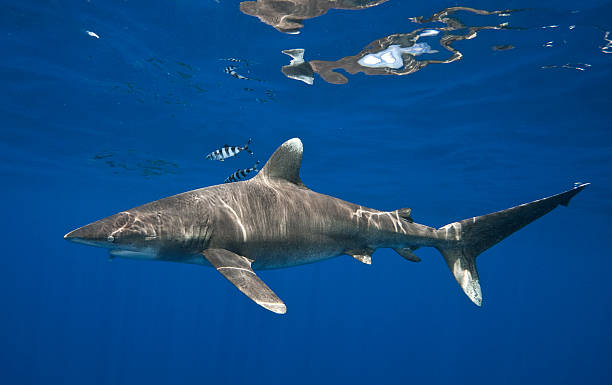
Once one of the most abundant large marine vertebrates on Earth. Commercial longlining reduced populations by 80–95% in some regions. Slow to reproduce — recovery timescale is measured in decades.

Targeted heavily for their large fins, which fetch premium prices. Populations have declined by more than 80% globally. Their schooling behavior makes them particularly easy to target and devastate.

The largest hammerhead species and one of the most prized for its fins. Listed as Critically Endangered in 2014. Severely impacted by both targeted fishing and bycatch across its range.

Takes 20 years to reach sexual maturity and produces few offspring. U.S. populations have declined by over 80%. Heavily impacted by commercial fishing both in targeted catch and as bycatch.

Prized for its meat in European markets. Northeast Atlantic populations collapsed due to overfishing in the 1960s–70s and have not recovered. Now subject to CITES trade controls.

The fastest shark in the ocean. Heavily targeted for its meat and fins. North Atlantic populations are considered overfished with no signs of recovery. CITES Appendix II listed since 2019.
Individual choices, collective pressure, and legislative action all matter. Here is how to contribute — regardless of where you are.
Refuse shark fin soup and check product labels for squalene (shark liver oil) in cosmetics and supplements. Demand-side reduction is what collapsed ivory markets — it works. Ask restaurants if their menu contains shark.
"Flake" in Australian fish and chips is shark. "Rock salmon" in the UK is shark. "Ocean whitefish" can be shark. Mislabeling is common and legal in many markets. Ask your fishmonger. Use the Seafood Watch app by Monterey Bay Aquarium.
Donate to or volunteer with organizations doing real, measurable work — Shark Trust, Shark Allies, Sea Shepherd, Project AWARE, and WildAid are among the most effective. Even small recurring donations fund policy campaigns and field research.
Advocate for fin trade bans, stronger bycatch regulations, and opposition to shark culling programs. Oceana maintains active campaigns with direct legislator contact tools. Letters and calls move policy when they come in volume.
A living shark is worth vastly more economically through ecotourism than through finning. Reef shark diving in the Bahamas generates an estimated $250,000 per shark over its lifetime vs. $200 dead. Support operators committed to no-touch, ethical shark diving.
Fear-based media coverage skews public perception and weakens political will for conservation. Sharks kill fewer than 10 people per year globally. Humans kill 100 million sharks. Context matters. Share it.
These organizations operate at the intersection of science, policy, and direct action. Each has a proven record in shark conservation.
UK-based charity working to advance the science, policy, and public awareness of shark and ray conservation globally. Campaigns include the Global Shark & Ray Census and fin trade reform advocacy.
sharktrust.org →Focused on legislative action, particularly fin trade bans and CITES protections. Successfully lobbied for U.S. and California fin trade bans. Runs direct campaigns targeting specific shark-harmful laws.
sharkallies.com →The world's largest ocean conservation organization. Campaigns for shark finning bans, bycatch reduction, and overfishing reform across multiple countries. Strong legislative track record.
oceana.org →Direct-action conservation organization. Deploys vessels to intercept illegal finning operations and poaching in international waters. Their campaigns have directly disrupted large-scale shark killing operations.
seashepherd.org →Specializes in demand-side campaigns. Their "When the buying stops, the killing can too" campaign in China demonstrably reduced shark fin consumption. Partners with high-profile ambassadors including Yao Ming.
wildaid.org →Diver-led conservation organization operating through the global scuba community. Focuses on citizen science, marine debris removal, and direct policy advocacy. The Dive Against Debris program generates real ocean health data.
projectaware.org →Funds research, education, and conservation projects worldwide with a focus on sharks and rays. Has supported hundreds of conservation projects and researchers across dozens of countries.
saveourseas.com →World Wildlife Fund's shark program pushes for strong CITES protections, sustainable fisheries policy, and habitat protection. Operating at the highest levels of international environmental policy.
worldwildlife.org →The scientific body that maintains the definitive Red List assessments for shark and ray species. Their data underpins virtually all global policy. The authoritative source for species status and population trends.
iucnssg.org →